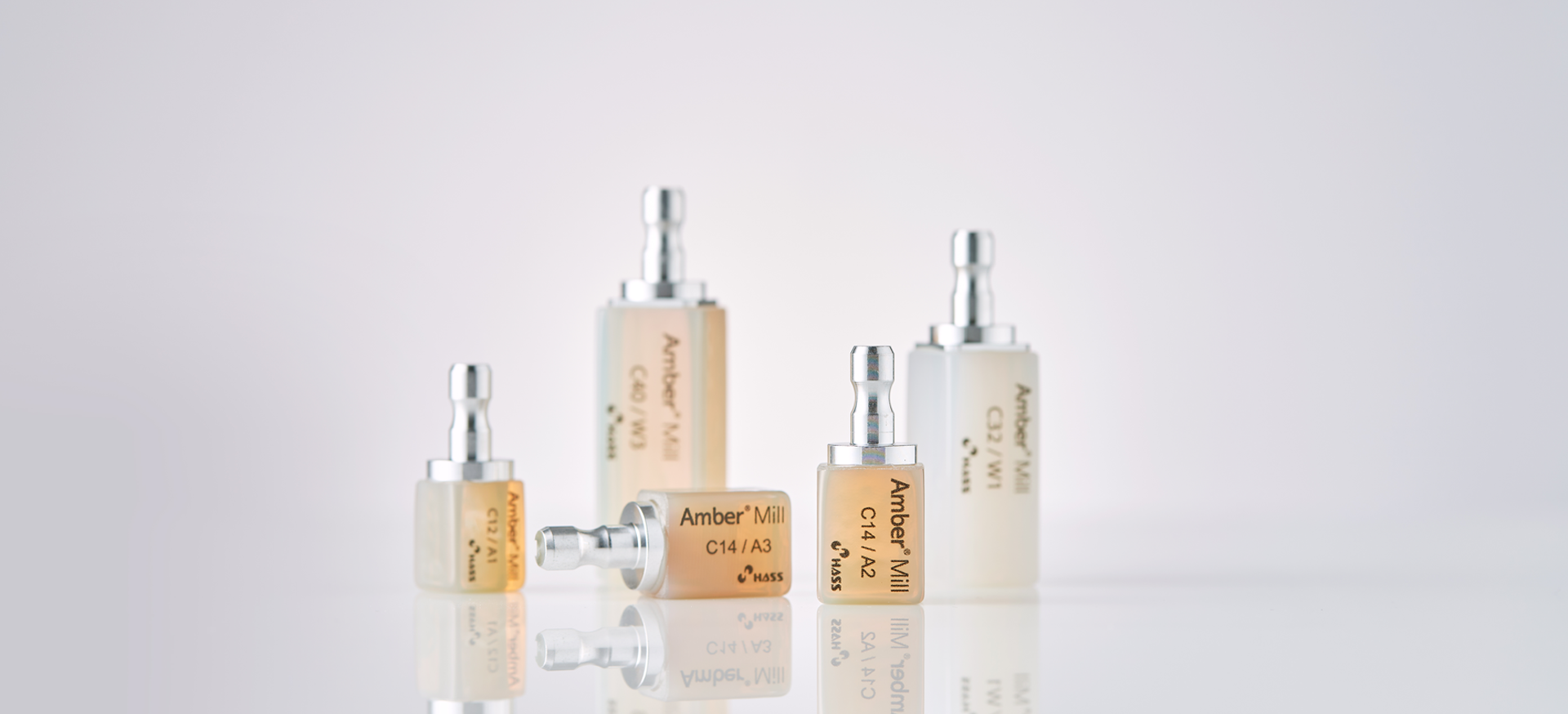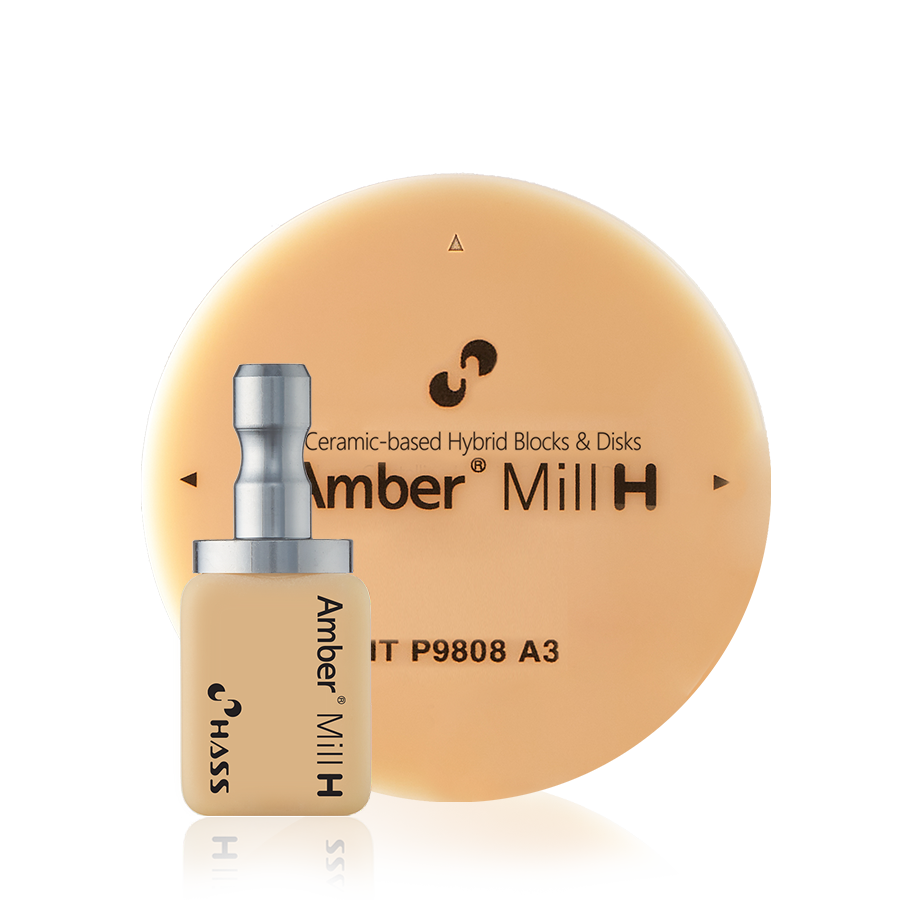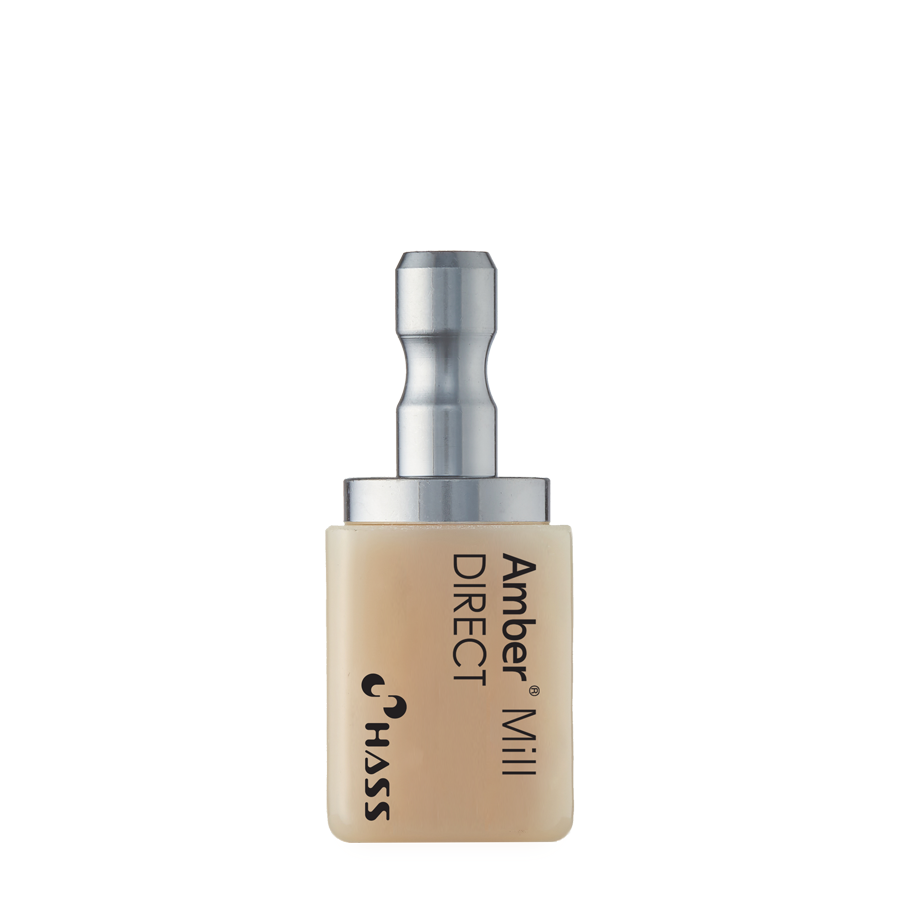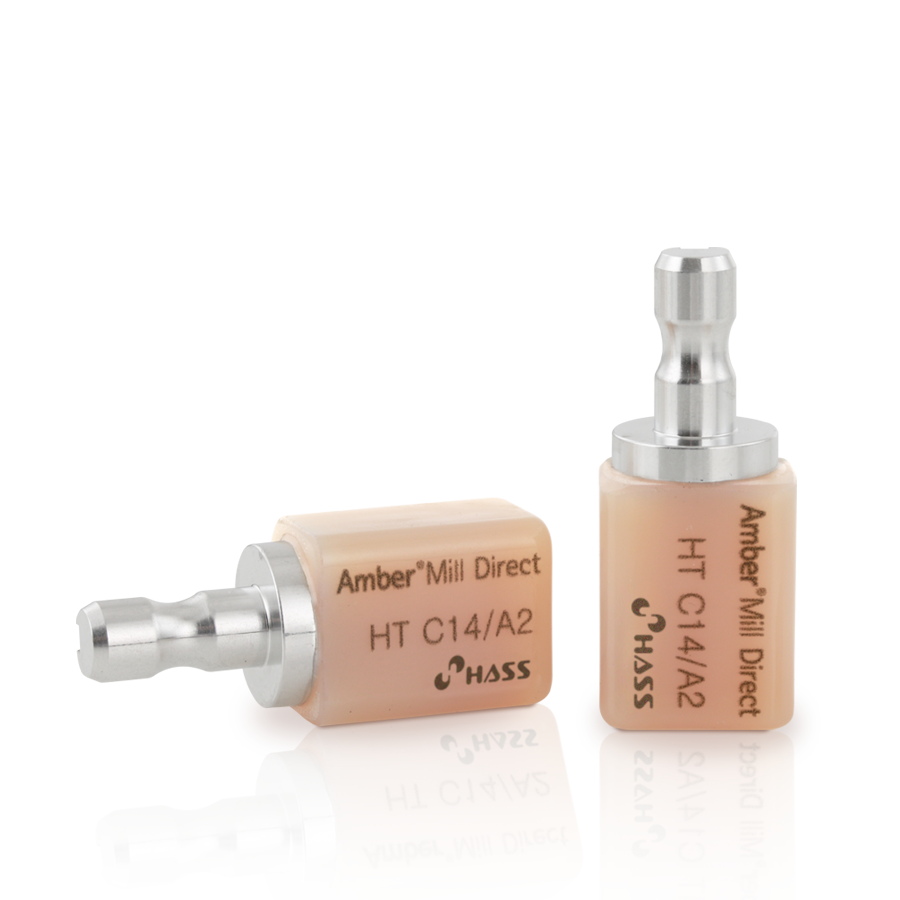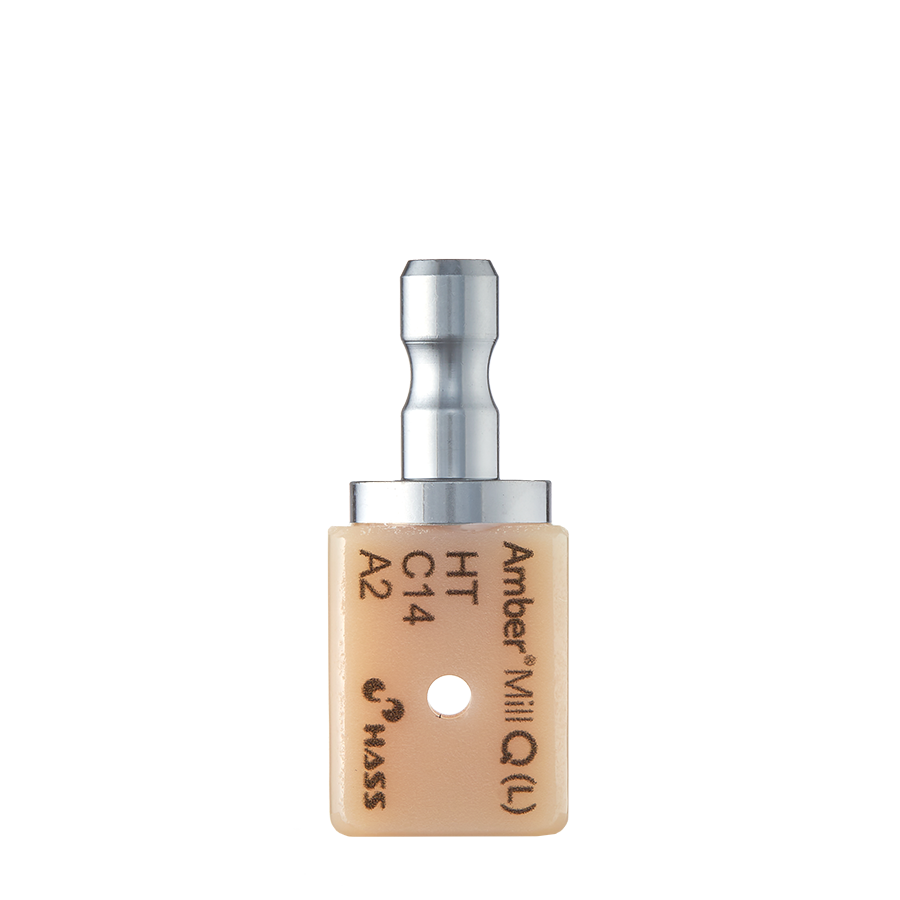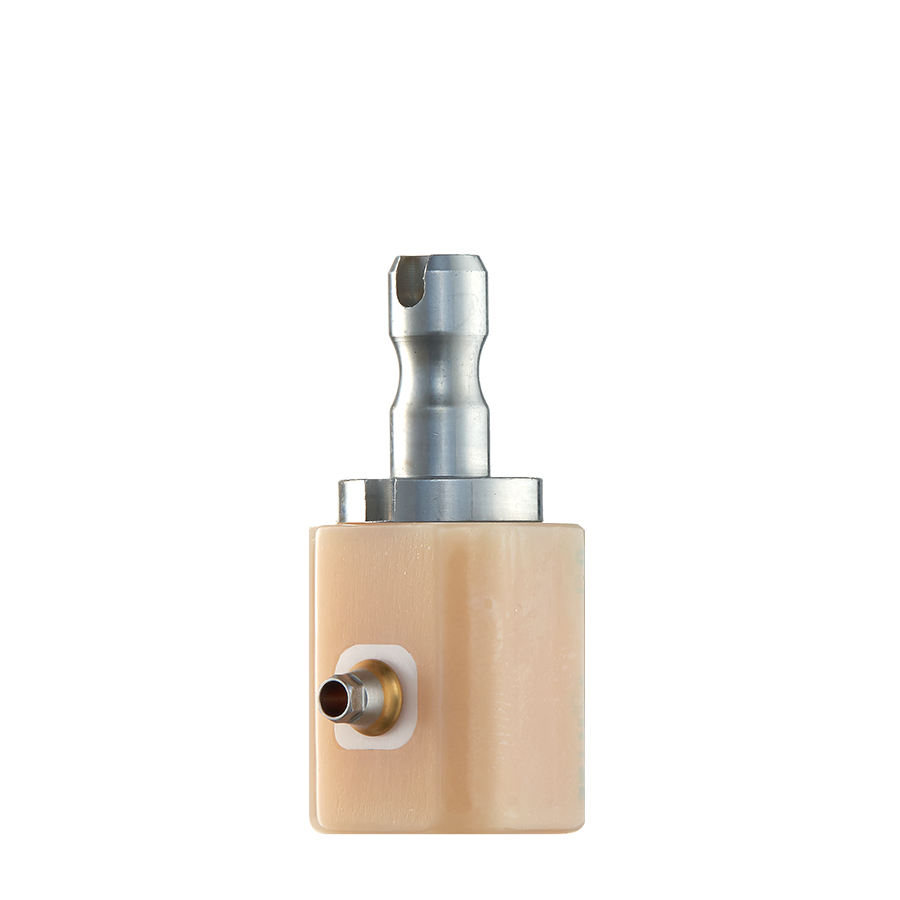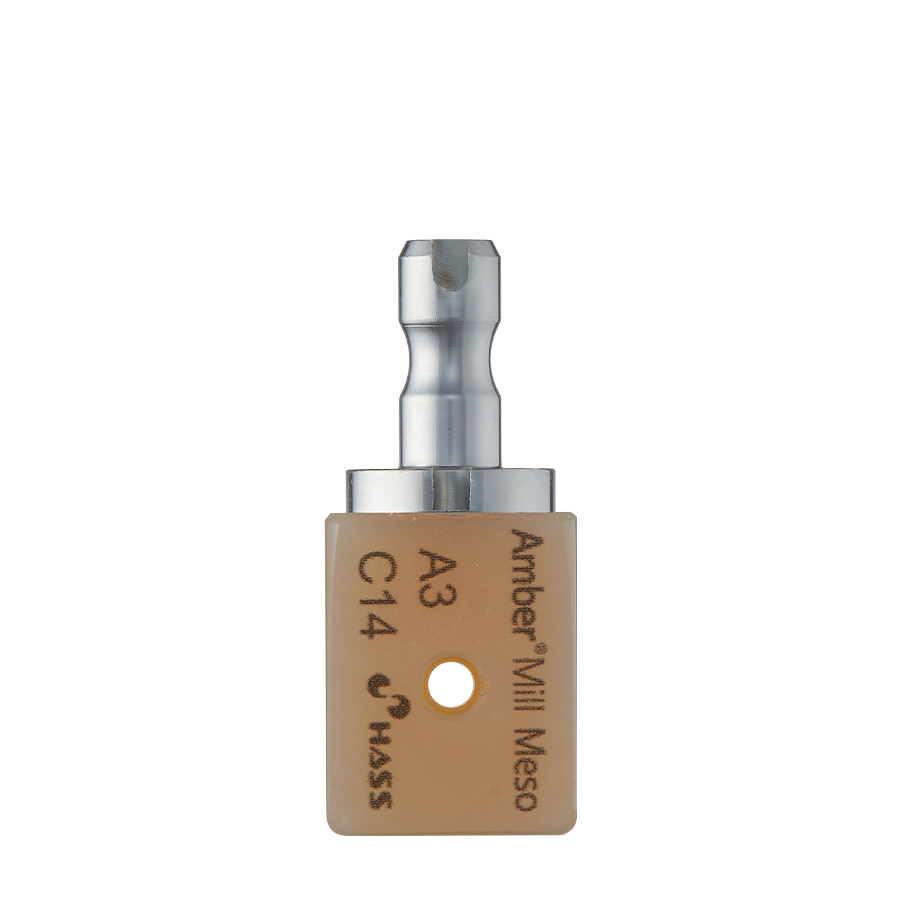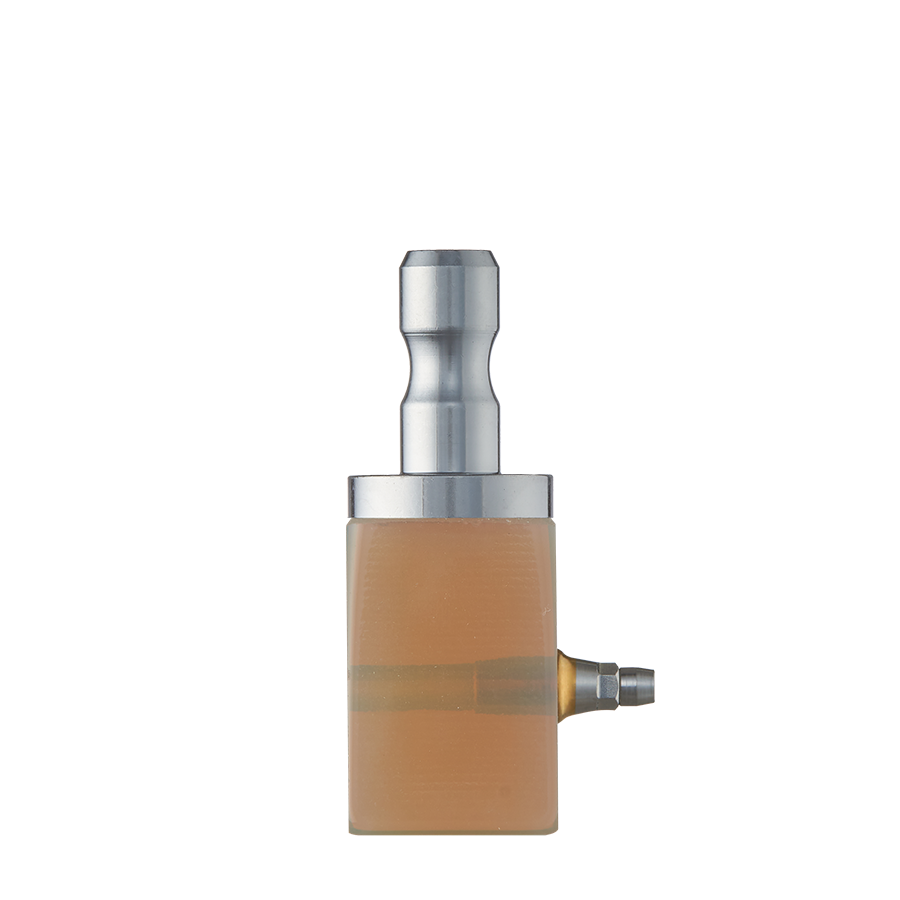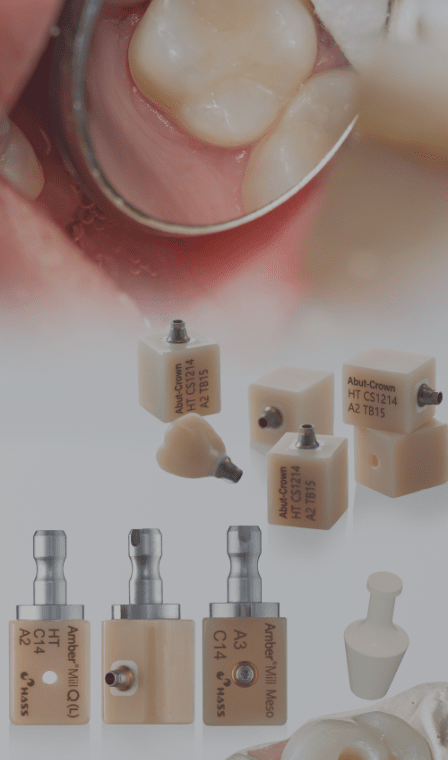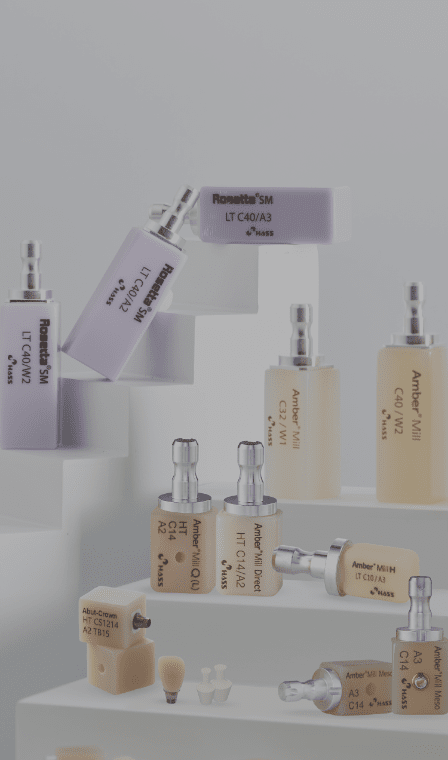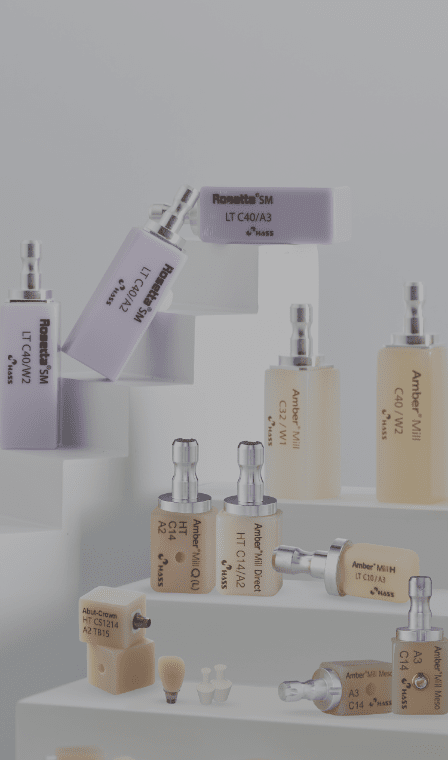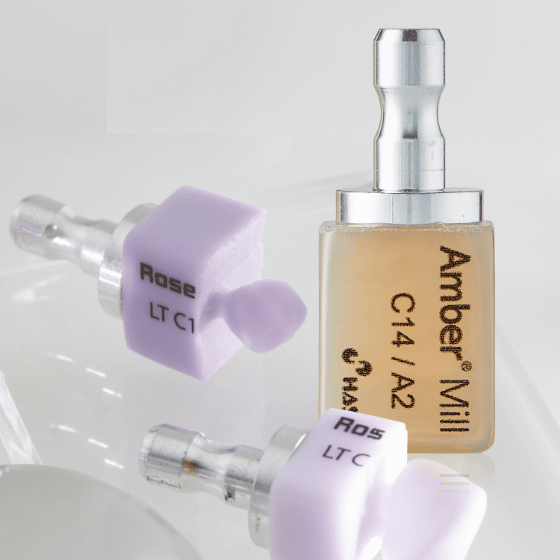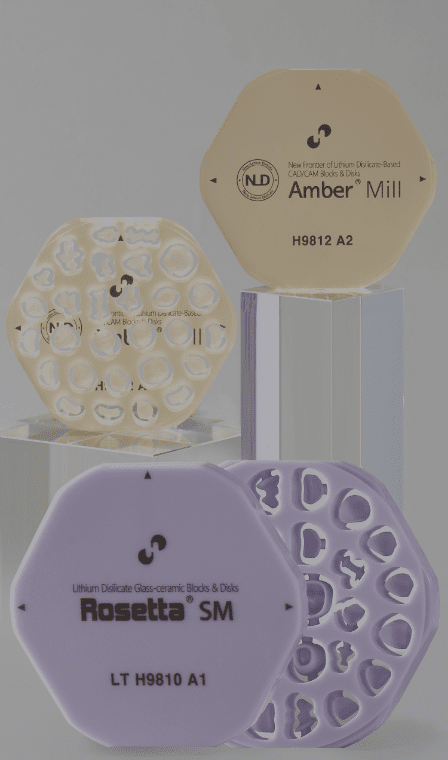


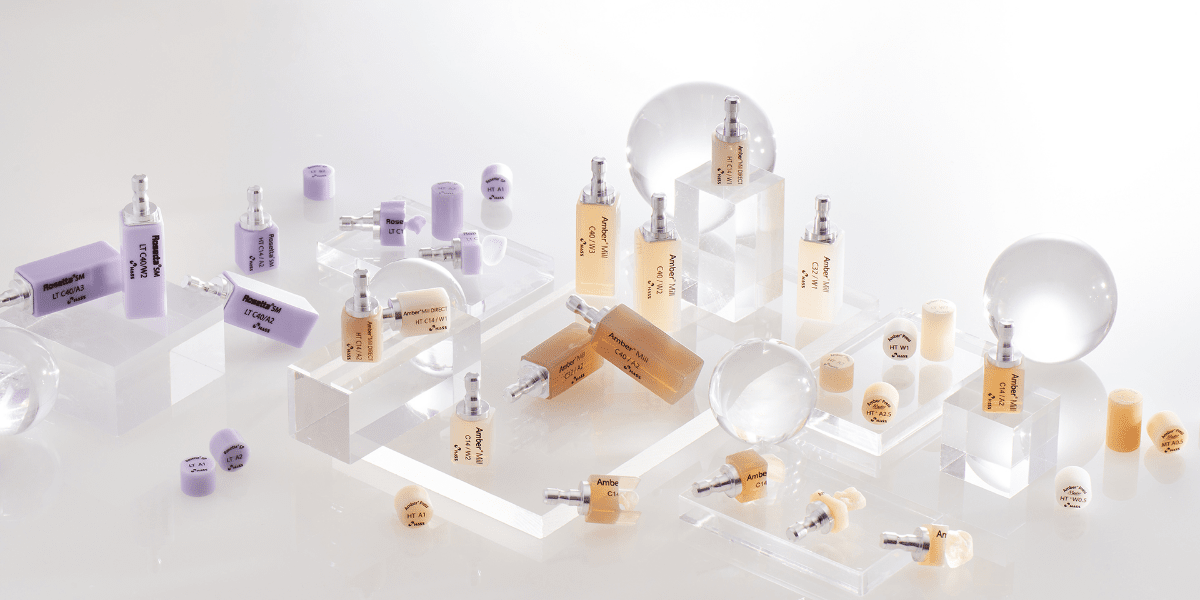

Amber Mill
Razones para elegir Amber Mill
Características clave 01
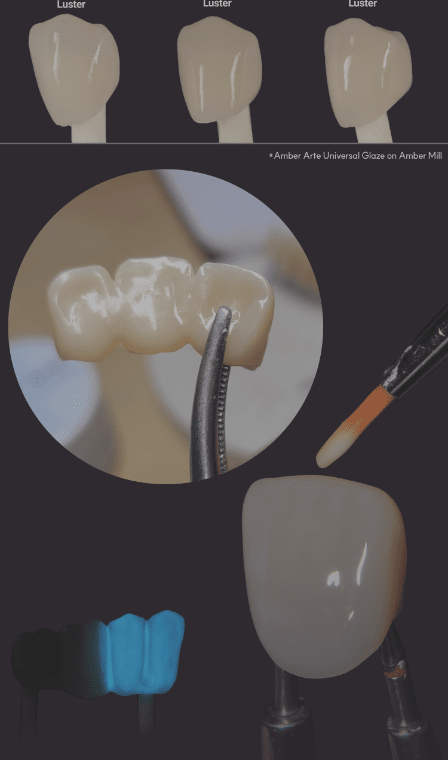
5 translucideces en 1 bloque
Características clave 02
Estabilidad en el fresado de bordes
Características clave 03
Opalescencia/fluorescencia biomimética
Características clave 01
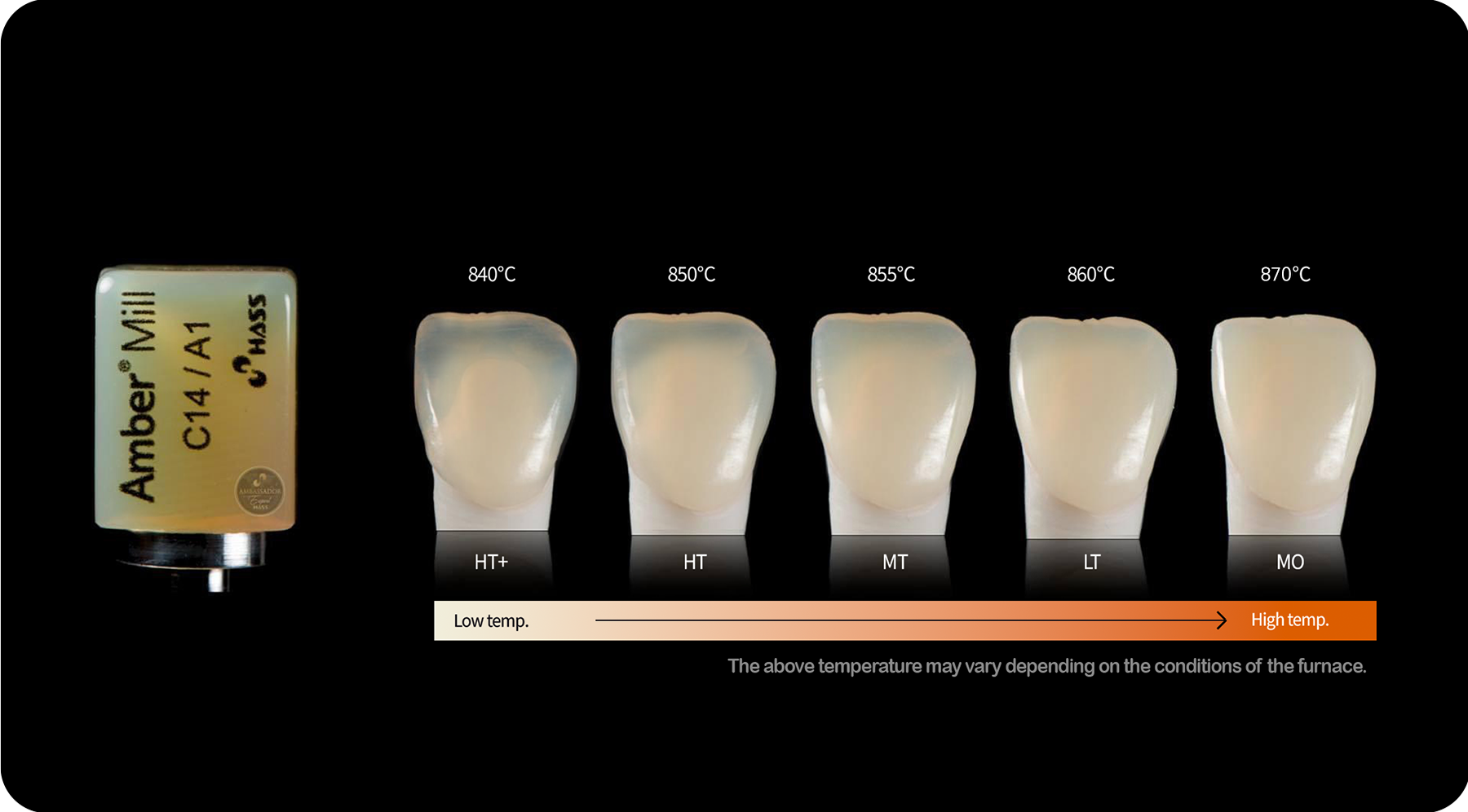
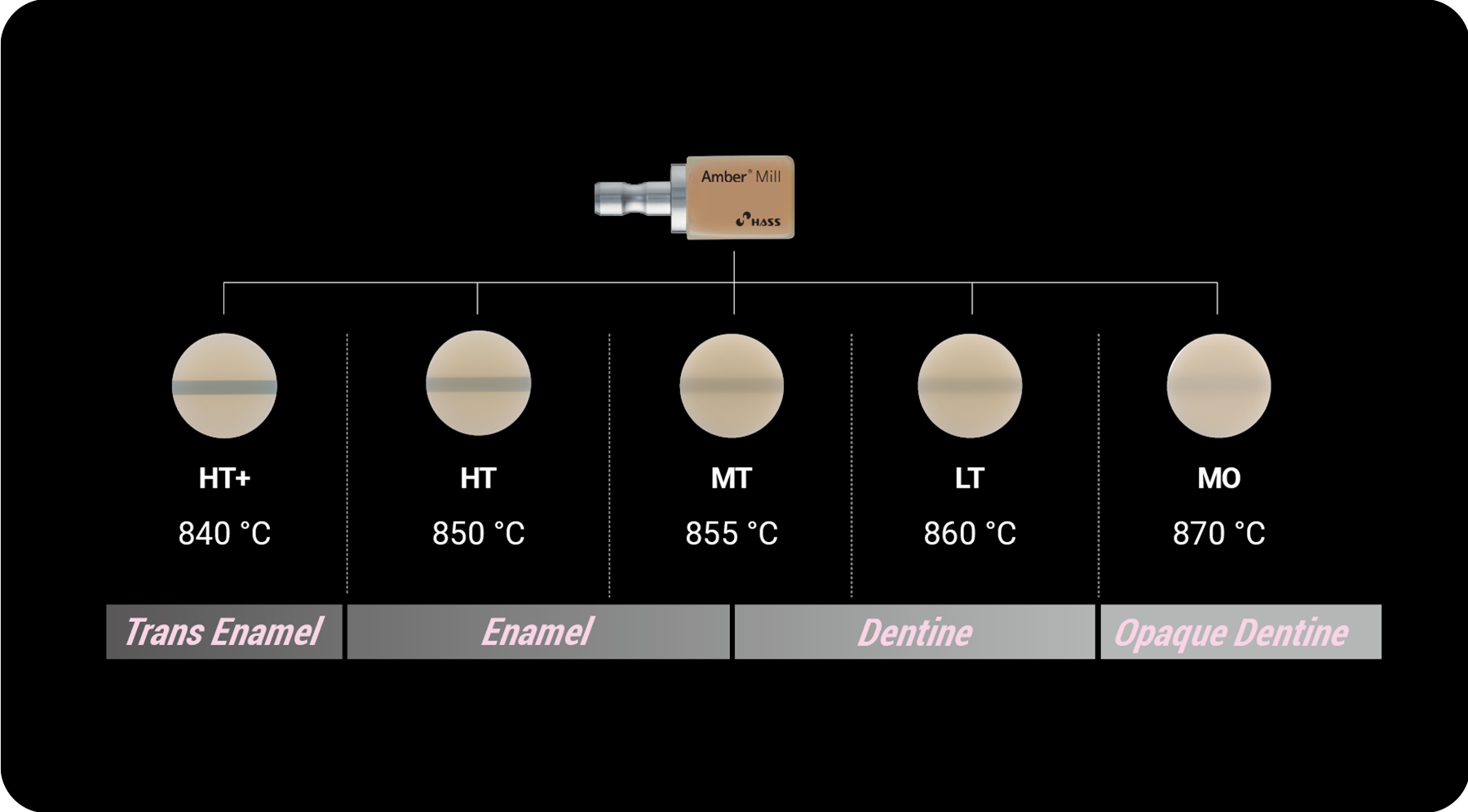
5 translucideces en 1 bloque
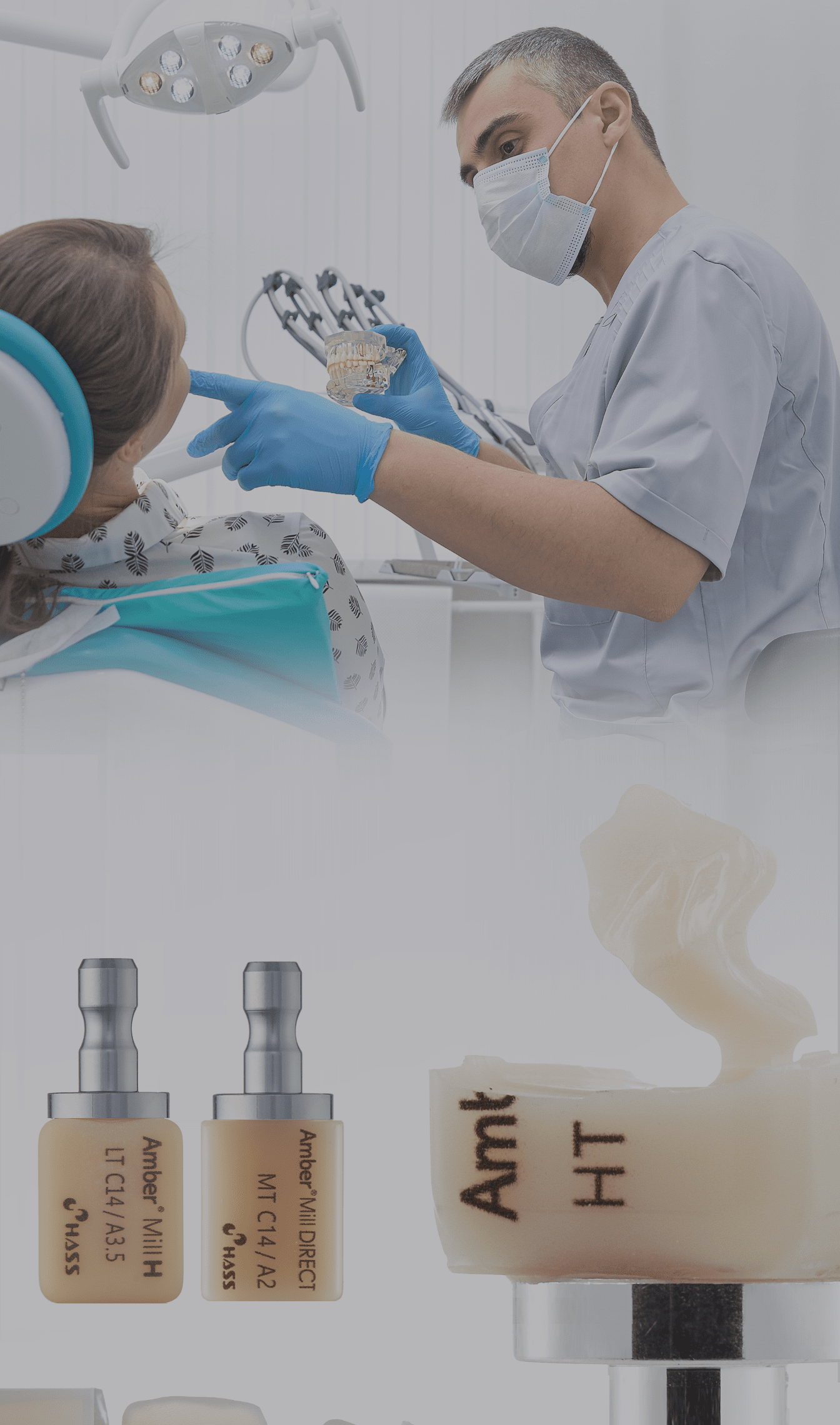
Con un solo bloque Amber® Mill, puedes crear restauraciones con una amplia gama de niveles de translucidez.
Simplemente selecciona el tono deseado y aplica el tratamiento térmico de translucidez a la temperatura adecuada.
Esta flexibilidad mejora significativamente la eficiencia del flujo de trabajo y simplifica la gestión del inventario de bloques CAD/CAM.
Características clave 02
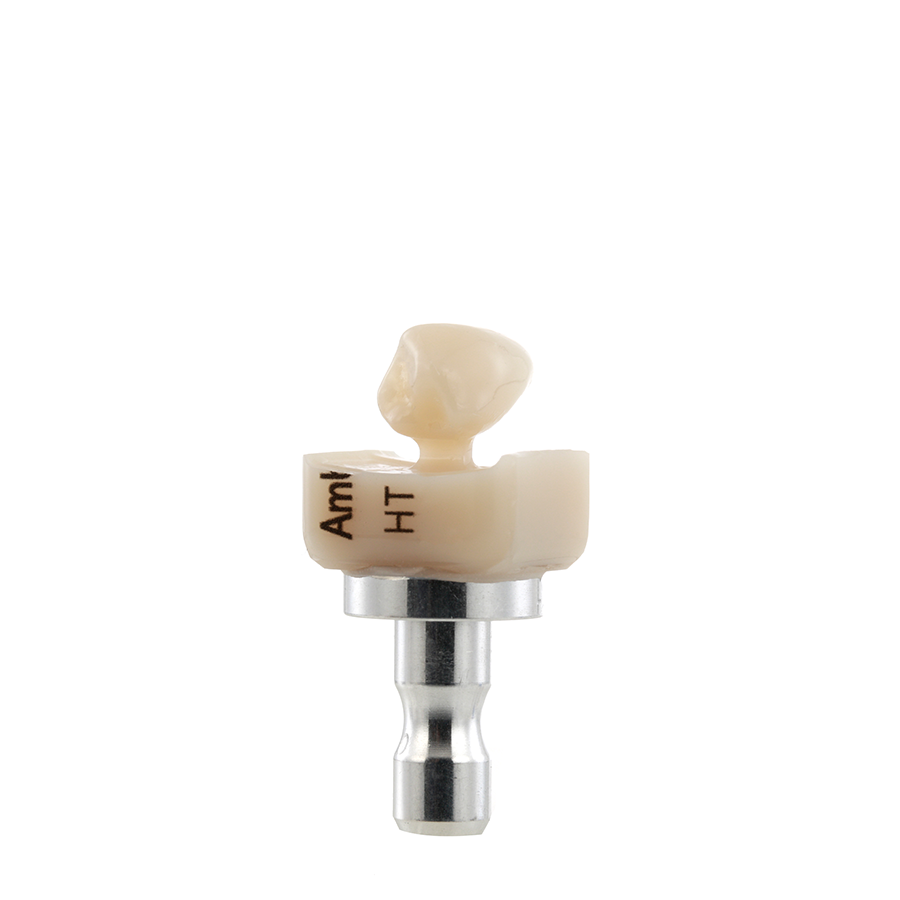
Estabilidad en el fresado de bordes
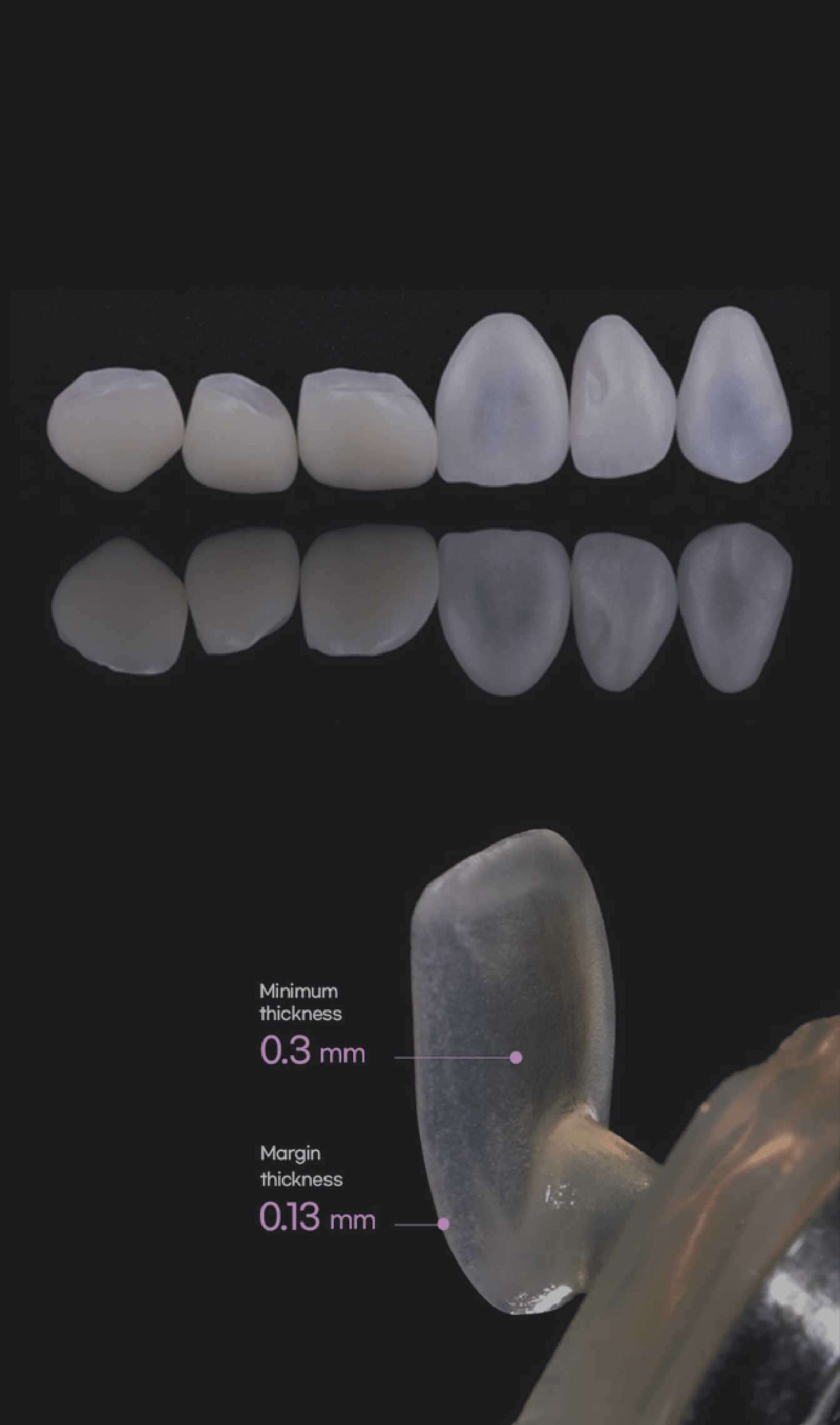
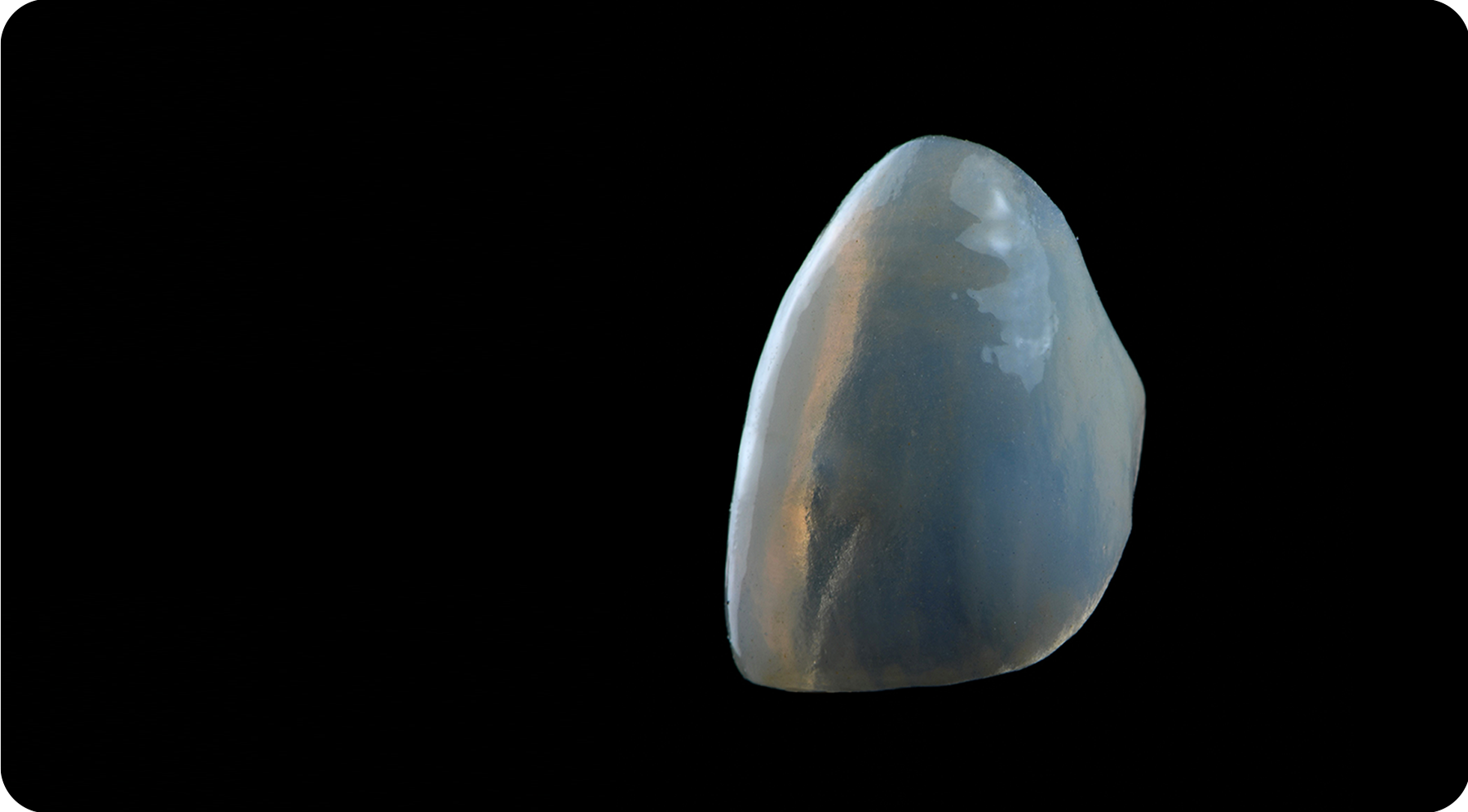
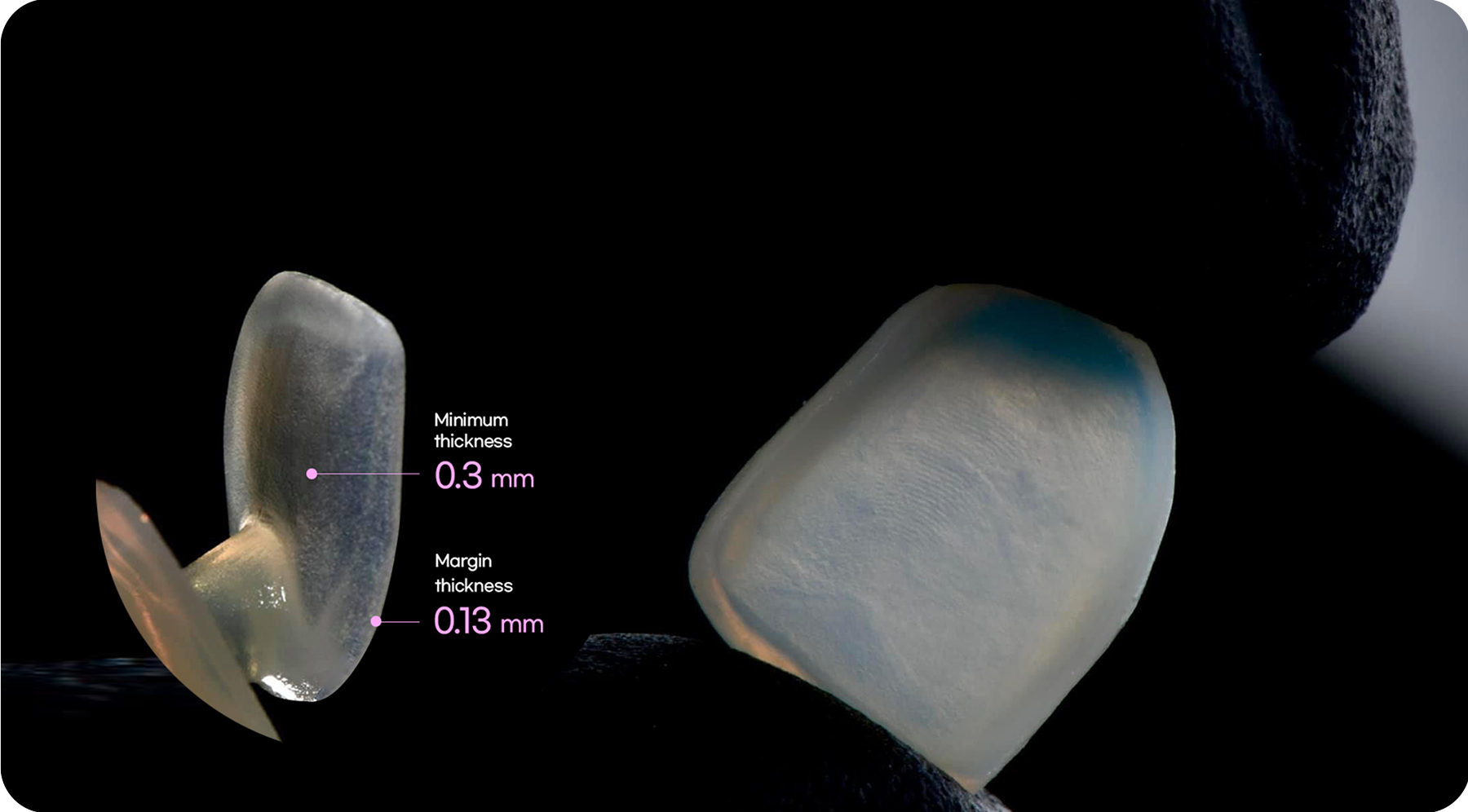
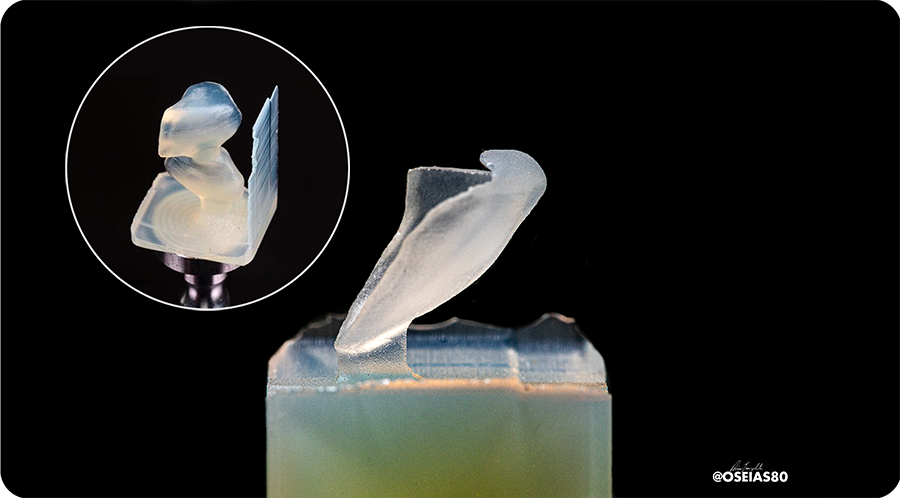
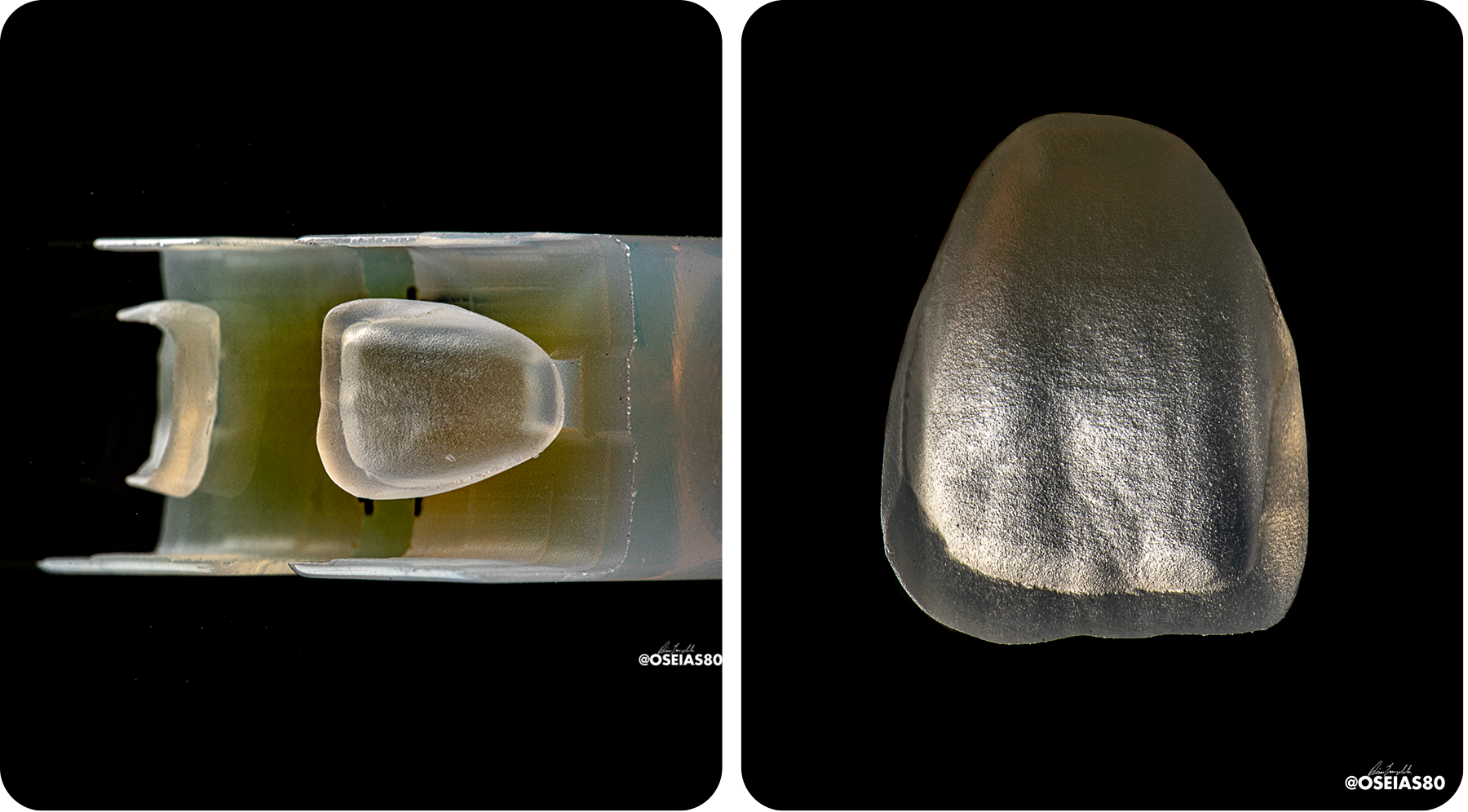
La excelente maquinabilidad de Amber® Mill se confirma claramente al revisar los bordes de las restauraciones fresadas.
Los bordes altamente estables, con menor incidencia de fracturas, demuestran que Amber® Mill es un bloque de disilicato de litio optimizado para sistemas CAD/CAM.
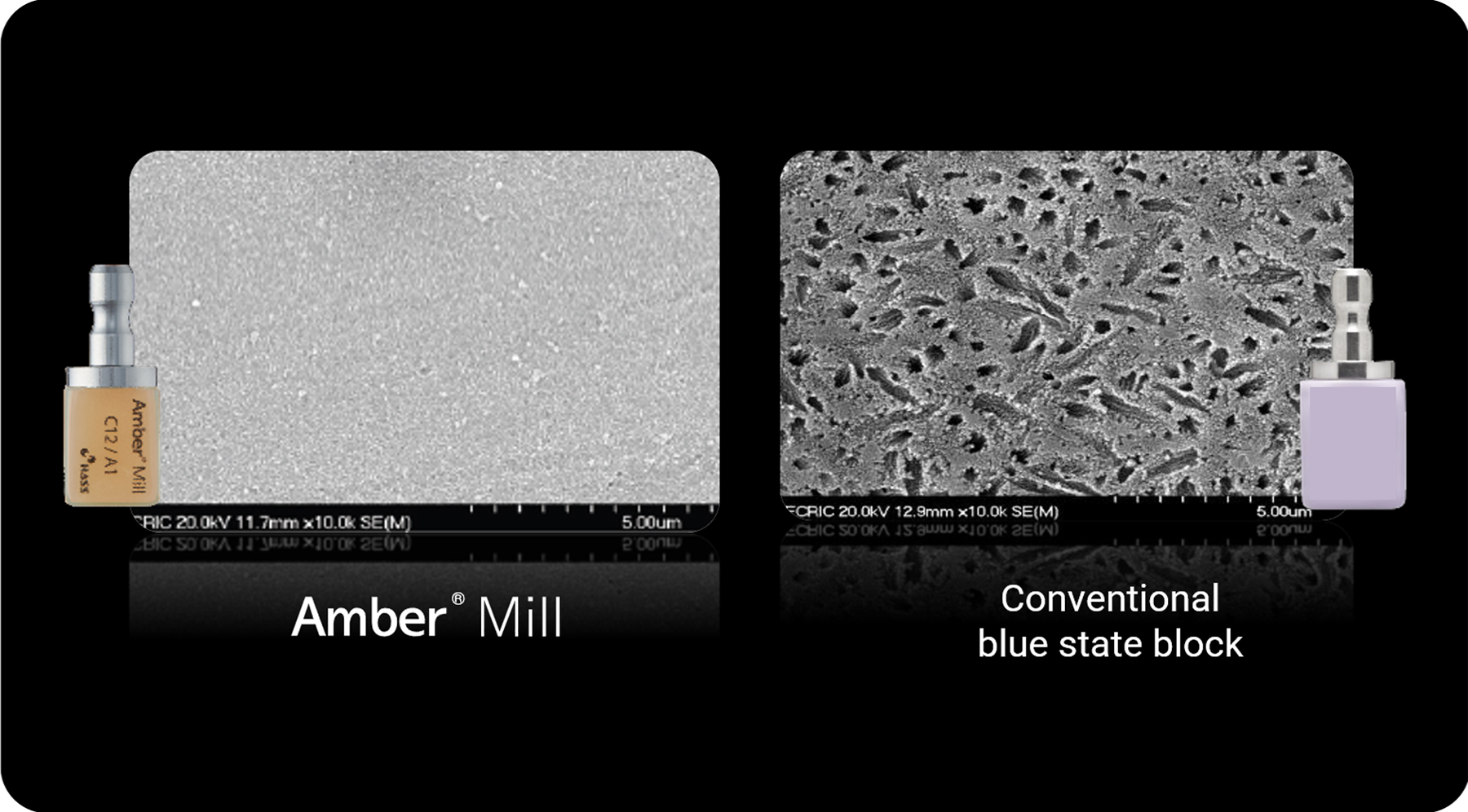
Por qué las restauraciones de Amber Mill presentan menos astillado
Características clave 03
Opalescencia/fluorescencia biomimética
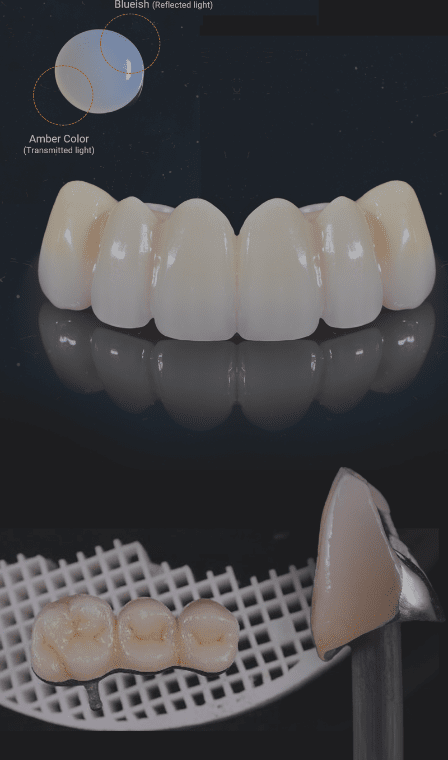
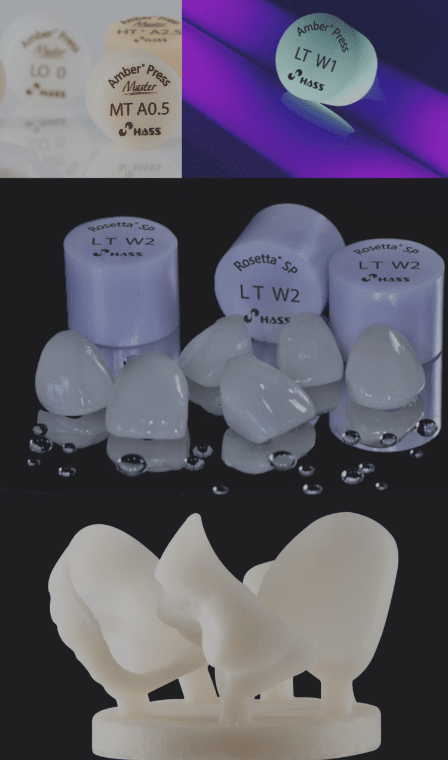
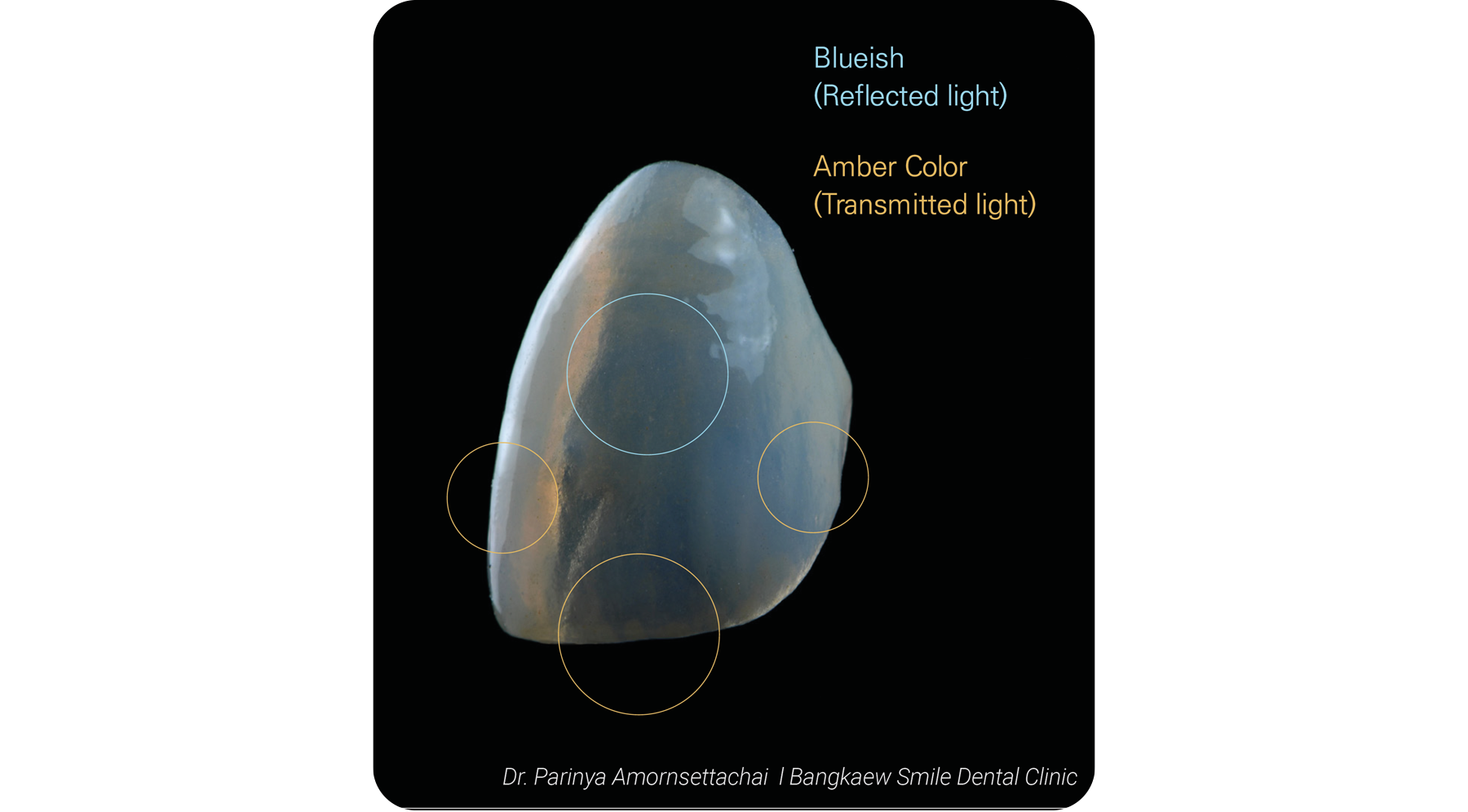
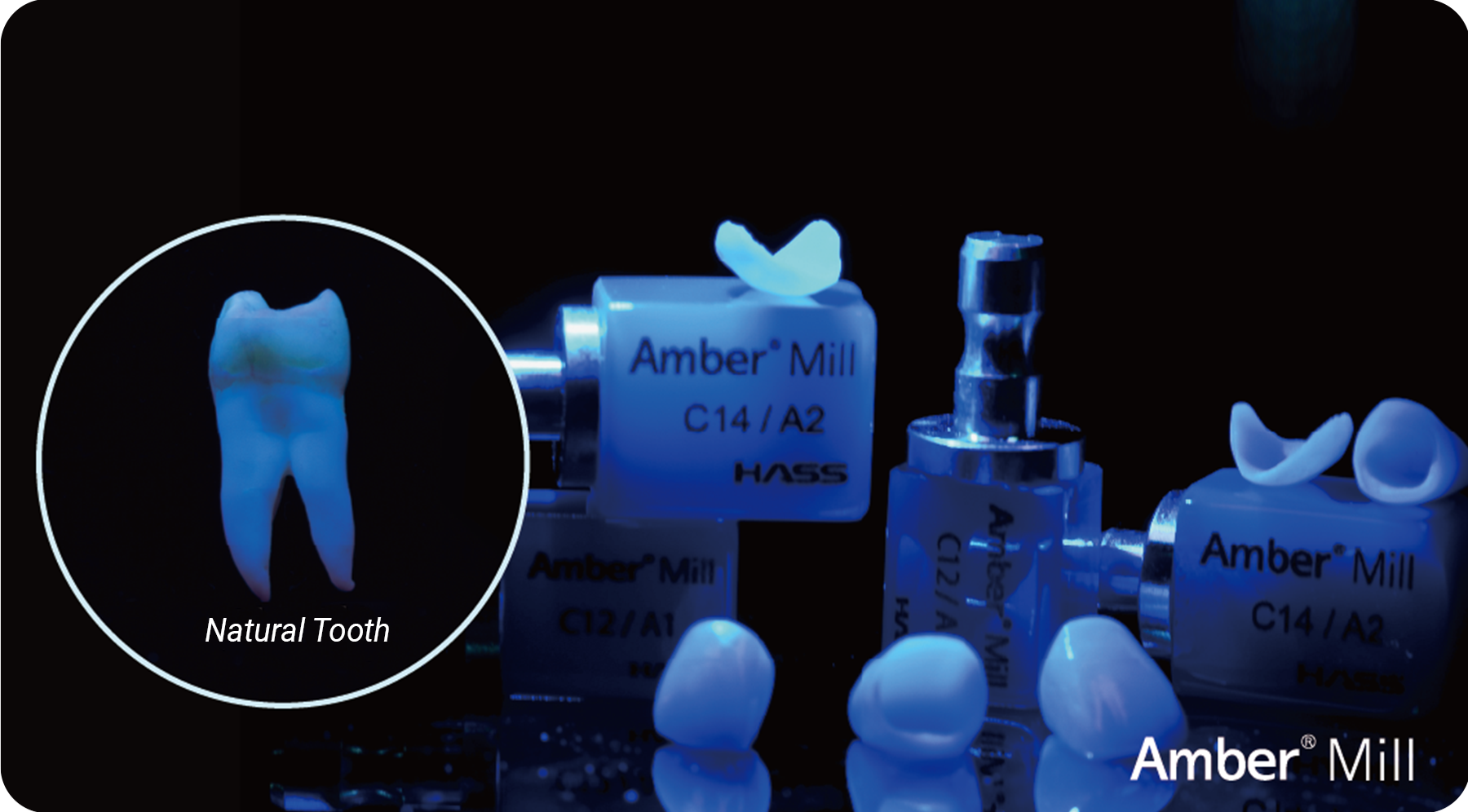
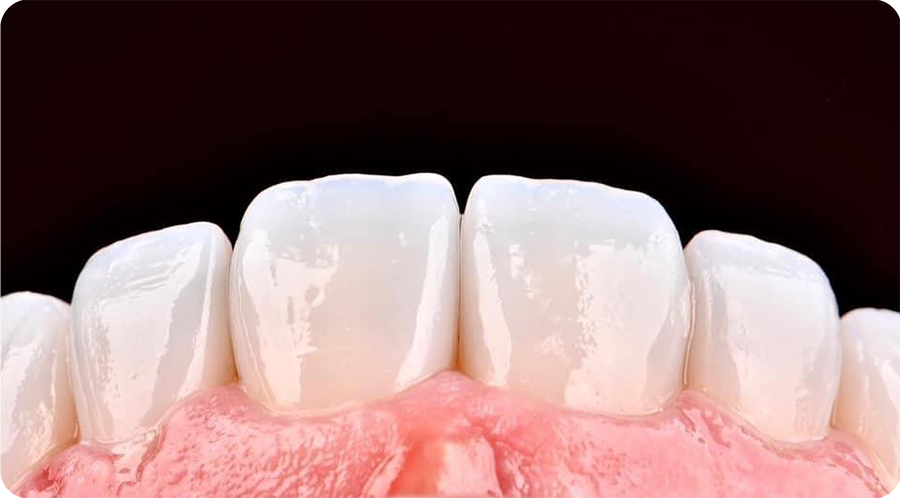
Amber® Mill ofrece una translucidez y fluorescencia excepcionales, permitiendo que las restauraciones logren un gradiente natural de color —desde la zona cervical hasta la superficie incisal u oclusal— únicamente con el glaseado, sin necesidad de tinción adicional.
Esto proporciona una ventaja estética significativa.
• Los dientes naturales cubiertos por esmalte presentan una translucidez característica: se ven azulados bajo luz reflejada y ámbar bajo luz transmitida.
• Amber® Mill está diseñado para replicar de manera muy cercana la translucidez natural del esmalte.
• También imita fielmente la fluorescencia natural de los dientes, mejorando la estética realista bajo diversas condiciones de iluminación.
Vea los resultados. Confíe en el material.

[1] https://doi.org/10.3390/ma12142252, Ruizhi Yin, Tae-Sung Bae*, Comparative Evaluation of Mechanical Properties and Wear Ability of Five CAD/CAM Dental Blocks. Materials, 2019.
[2] https://doi.org/10.3390/ma13204680, Seen-Young Kang, Seung-Youl Lee*, Evaluation of the Milling Accuracy of Zirconia Reinforced Lithium Silicate Crowns Fabricated Using the Dental Medical Device System: A Three-Dimensional Analysis. Materials, 2020.
[3] https://doi.org/10.22974/jkda.2020.58.7.005, Tae Sung Bae*, Dental application of glass-ceramic materials for aesthetic restoration. The Journal of the Korean Dental Association, 2020.
[4] https://doi.org/10.14815/kjdm.2020.47.3.157, Su-Yeon Choi, Tae Sung Bae*, Effect of fabrication method of lithium disilicate crown on fitness. Korean Journal of Dental Materials, 2020.
[5] https://doi.org/10.1016/j.jmbbm.2021.104456, Bogna Stawarczyk*, Modern CAD/CAM silicate ceramics: their translucency level and impact of hydrothermal aging on translucency, Martens hardness, biaxial flexural strength and their reliability. Journal of the Mechanical Behavior of Biomedical Materials, 2021.
[6] https://doi.org/10.3390/ma14092094, Seok-Ki Jung, Hyun Sik Kim*, Modulation of Lithium Disilicate Translucency through Heat Treatment. Materials, 2021.
[7] https://doi.org/10.3290/j.jad.b200026, Han-Gyul Sung, Yoon-Hyuk Huh*, Composite Cement Components Stabilize the Bond between a Lithium-Disilicate Glass-Ceramic and the Titanium Abutment. Journal of Adhesive Dentistry, 2021.
[8] Ye-Jin Kim*, Effect of material and connector design on fracture resistance of 3-unit monolithic ceramic prostheses. Doctoral Dissertation, Gangneung-Wonju National University, 2022.
[9] https://doi.org/10.14458/RSU.res.2022.99, Suchaya Tantrachoti*, Two-Body Wear Resistance of Three Different Lithium Disilicate, and One Zirconia Reinforced Lithium Silicate CAD/CAM Materials. RSU International Research Conference 2022, 2022.
[10] https://doi.org/10.1922/EJPRD_2332Lee00, Ye-Jin Lee, Lee-Ra Cho*, Evaluation of Various Polishing Systems for Lithium Disilicate Glass-Ceramic. European Journal of Prosthodontics and Restorative Dentistry, 2022.
[11] https://doi.org/10.14815/kjdm.2022.9.237, Tae-Yeon Kim, Tae Sung Bae*, Effect of heat treatment time on the properties of lithium disilicate glass-ceramics. Korean Journal of Dental Materials, 2022.
[12] https://doi.org/10.21608/edj.2022.162266.2256, Hanaa S. Nassar*, Internal Fit and Marginal Adaptation of CAD/CAM Lithium Disilicate Endocrowns Fabricated with Conventional Impression and Digital Scanning Protocols: An In-Vitro Study. Egyptian Dental Journal, 2022.
[13] https://doi.org/10.1016/j.prosdent.2022.09.018, Ye-Jin Kim, Yoon-Hyuk Huh*, Connector design effects on the in vitro fracture resistance of 3-unit monolithic prostheses produced from 4 CAD-CAM materials. The Journal of Prosthetic Dentistry, 2022.
[14] https://doi.org/10.1111/jerd.12984, Mona Alhomoud, Jin-Ho Phark*, Bond Strength to Different Types of Lithium Disilicate Reinforced Ceramics. Journal of Esthetic and Restorative Dentistry, 2022.
[15] https://doi.org/10.4047/jap.2022.14.1.56, Carlos Alberto Jurado, Jared Hyer*, Color stability of fully- and pre-crystallized chair-side CAD-CAM lithium disilicate restorations after required and additional sintering procedures. The Journal of Advanced Prosthodontics, 2022.
[16] https://doi.org/10.21608/edj.2023.199352.483, Amr Abd-Elaiz Shebl Kassem*, Fracture Resistance of Four Different Types of CAD/CAM Lithium Disilicate Endocrowns. Egyptian Dental Journal, 2023.
[17] https://doi.org/10.26650/eor.2023.09111, Mustafa Yilmaz*, The effects of various scaling instruments on the surface roughness of monolithic zirconia and lithium disilicate. European Oral Research, 2023.
[18] https://doi.org/10.1111/jopr.13644, Carlos A. Jurado, Kelvin I. Afsharhafar*, Effect of sintering on the translucency of CAD-CAM lithium disilicate restorations: A comparative in vitro study. Journal of Prosthodontics, 2023.
[19] https://doi.org/10.24018/ejdent.2023.4.1.239, Cristian Abad-Coronel*, Digital Volumetric Analysis of CAD/CAM Ceramic Materials after Tooth Brushing. European Journal of Dental and Oral Health, 2023.
[20] https://doi.org/10.1111/jopr.13632, Almira Ada Diken Türksayar, Mustafa Borga Dönmez*, Optical properties, biaxial flexural strength, and reliability of new-generation lithium disilicate glass-ceramics after thermal cycling. Journal of Prosthodontics, 2023.
[21] https://doi.org/10.1016/j.dental.2023.08.059, Yoseok Shin*, Clinical Effectiveness of CAD/CAM Lithium Disilicate Inlays: A 6-month Randomized Controlled Trial. Dental Materials, 2023.
[22] https://doi.org/10.1111/jopr.13867, Carlos A. Jurado, Salahaldeen Abuhammoud*, Fracture load of chairside CAD-CAM veneers fabricated with pre- and fully crystallized lithium disilicate ceramics. Journal of Prosthodontics, 2024.
[23] https://doi.org/10.1016/j.jdent.2024.104987, Münir Demirel, Mustafa Borga Dönmez*, Fabrication trueness and internal fit of different lithium disilicate ceramics according to post-milling firing and material type. Journal of Dentistry, 2024.
[24] https://doi.org/10.3390/ma1702396, Chong-Yang Li, Ji-Suk Shim*, Translucency and Strength of Lithium Disilicate for CAD/CAM at Different Thermal Temperatures and Thicknesses: An In Vitro Study. Materials, 2024.
[25] https://doi.org/10.1111/jerd.13391, Min-Gyung Song, Lee-Ra Cho*, Edge Chipping Resistance and Flexural Strength of CAD-CAM Ceramics Before and After Thermomechanical Aging. Journal of Esthetic and Restorative Dentistry, 2024.
[26] https://doi.org/10.47059/ijmtl.v28i1.369, Amal Abdallah A. Abo-Elmaged*, The translucency heat-treatment of two ceramic CAD milling blocks and their effect on leakage and film thickness. International Journal of Medical Toxicology & Legal Medicine, 2024.
[27] https://doi.org/10.2341/23-043-L Carlos Alberto Jurado, Akimasa Tsujimoto*, Fracture Resistance of Chairside CAD/CAM Lithium Disilicate-Reinforced Ceramic Occlusal Veneers With and Without Margin and Full Coverage Crowns. Operative Dentistry, 2024.
[28] https://doi.org/10.3390/ma18071591, Alvaro Munoz, Alessandro Vichi*, Characterization of a Lithium Disilicate CAD/CAM Material With Firing Temperature-Controlled Translucency. Materials, 2025.
[29] https://doi.org/10.1111/jopr.14028, Mohammed A. Akl*, Effect of Crystallization Temperature on the Flexural Strength of Lithium Disilicate Glass Ceramics. Journal of Prosthodontics, 2025.
[30] https://doi.org/10.1016/j.jidm.2025.03.01, Saisampan Moonfong, Pornpat Jangkomkho*, Effect of Difference Thickness of Zirconia and Lithium-Disilicate Glass Ceramic on Color Differences and Translucency Parameter. Journal of International Dental and Medical Research, 2025.
[31] https://doi.org/10.2334/josnusd.24-0318, Supontee Teerakanok, Boonlert Kukiattrakoon*, Effect of sintering temperature on crystal structure, optical and thermal properties, and surface roughness and topography of nanolithium disilicate and zirconia-reinforced nanolithium disilicate ceramics. Journal of Oral Science, 2025.
[32] https://doi.org/10.1111/jerd.13489, Anvita Maharishi, Shane N. White*, Characterization of Lithia-Based Machinable Glass-Ceramic Materials. Journal of Esthetic and Restorative Dentistry, 2025.
[33] https://doi.org/10.17219/dmp/171899, Anselmo A. Simionato, Renata Cristina Silveira Rodrigues*, Effects of processing techniques of monolithic lithium disilicate ceramic on wear resistance against zirconia antagonist. Dental and Medical Problems, 2025.
[34] https://doi.org/10.1016/j.jmbbm.2025.07106, Carola Iringer*, Impact of polishing, glazing and firing, restoration thickness, point of loading and aging on the edge chipping resistance of lithium silicate ceramics. Journal of the Mechanical Behavior of Biomedical Materials, 2025.
[35] https://doi.org/10.1016/j.prosdent.2025.05.021, Abdulhaluk Savaş*, Effect of surface finishing, coffee thermal cycling, and repolishing on the optical properties of lithium disilicate-based CAD-CAM glass ceramics. Journal of Prosthetic Dentistry, 2025.
[36] https://doi.org/10.1016/j.prosdent.2025.12.042, Hüseyin Şeker, Mustafa Borga Dönmez*, Do crystallization and refiring protocols affect the translucency, flexural strength, and Weibull reliability parameters of nanolithium disilicate glass-ceramic? The Journal of Prosthetic Dentistry, 2026.01.27.
[37] https://doi.org/10.3390/biomimetics10080508, Fabio Andretti, Carlos A. Jurado*, Hamid Nurrohman*, Surface Assessment of a Novel Acid-Etching Solution on CAD/CAM Dental Ceramics. Biomimetics, 2025.09.04.
[38] https://doi.org/10.3390/jfb16110408, Mai Soliman*, Influence of Sintering Parameters on the Mechanical Behaviour of Lithium Disilicate Glass Ceramics: An In-Vitro Study. Journal of Functional Biomaterials, 2025.11.02.
[39] https://doi.org/10.1155/ijod/7488948, Carlos A.Jurado, Franciele Floriani*, Impact of Ceramic Composition and Thickness on Light Transmission in CAD/CAM Lithium Disilicate Materials: An In Vitro Study. International Journal of Dentistry, 2025.09.31.
[40] https://doi.org/10.3390/ma18214831, Serpil Demiro˘glu, Salim Ongun*, Influence of Surface Treatments and Thermocycling on Wettability, Roughness, and Bond Strength of Lithium Disilicate CAD/CAM Ceramics. Materials, 2025.10.22.
[41] https://doi.org/10.1186/s12903-025-06518-w, Nouran Gamal*, Effect of crystallization temperature and holding time on flexural strength, color and translucency of nano lithium disilicate glass ceramic. BMC Oral Health, 2025.07.11.
[42] https://doi.org/10.3390/jfb16110400, Youngchae Cho, Deuk Yong Lee*, Influence of Machining, Polishing, and Glazing on Surface Properties and Biological Performance of Zirconia and Lithium Disilicate Dental Ceramics. Journal of Functional Biomaterials, 2025.10.27.
[43] https://doi.org/10.5005/jp-journals-10024-3881, Alisa Tapananon*, Minimally Invasive Multidisciplinary Management of Tetracycline-stained and Congenitally Missing Teeth. The Journal of Contemporary Dental Practice, 2025.07.15.
[44] https://doi.org/10.1155/ijod/8854731, Fateme Abdarjouy, Sima Shahabi*, The Effect of Erosion on Optical Properties and Surface Texture of Stained Lithium Disilicate Restorations. International Journal of Dentistry, 2025.10.13.
[45] https://doi.org/10.1155/ijod/4245703, Silvia Rojas-Rueda, Fabio Andretti*, Comparative Evaluation of Novel and Conventional Acid Etchants on the Surface Roughness of Lithium Disilicate and Zirconia Ceramics. International Journal of Dentistry, 2026.08.12.
[46] https://doi.org/10.3390/ma19071451, Beata Dejak*, Influence of Prosthetic Substrate, Cement, and Opaquer Liner on Color Matching of Translucent Zirconia- and Lithium-Based Ceramics. Materials, 2026.04.05.
[47] https://doi.org/10.1016/j.prosdent.2026.03.012, Nutthaporn Lerttanpan, Pasiree Thongthai*, Color stability and translucency of CAD-CAM lithium disilicate ceramic materials after repeated firings using different firing modes: An in vitro study. Journal of Prosthetic Dentistry, 2026.04.01.
[48] https://doi.org/10.1186/s12903-026-09280-9, Remzi Fırat*, Effect of hydrofluoric acid and femtosecond laser application sequence on nano-lithium silicate CAD/CAM ceramic bonding: an in vitro study. BMC Oral Health, 2026.07.20.
[49] https://doi.org/10.1016/j.jdent.2026.106895, Seung-Kyung Kwon, Dohyun Kim*, Clinical performance of two lithium disilicate CAD/CAM materials in posterior Class II inlay restorations: a 48-month randomised split-mouth clinical trial. Journal of Dentistry, 2026.
[50] https://doi.org/10.3390/inorganics14020056, Mai Soliman*, Evaluating Translucency and Color Changes in Lithium Disilicate Ceramics After SinteringModification and Artificial Aging. Inorganics, 2026.02.12.
[51] https://doi.org/10.1186/s12903-025-07629-0, Radwa Salah Atta*, Fracture resistance of different overlay designs with novel lithium disilicate materials on 3D printed dies. BMC Oral Health, 2026.02.01
![Scientific Data] Amber Mill](https://hassbio-head.s3.ap-northeast-2.amazonaws.com/downloads/images/8pGUe3Yw5Q4EXH61VudNjmco3W5pVklRjX9lQ3xM.png)
![Reference Articles] Amber Mill](https://hassbio-head.s3.ap-northeast-2.amazonaws.com/downloads/images/S3nSScxwq2Y32XThe4rvw6ZQpC5sB6JQdoLtN3lg.png)
![Reference Articles] Amber Mill Direct](https://hassbio-head.s3.ap-northeast-2.amazonaws.com/downloads/images/HFhPUzF9qK401ILc19qGtIAzde4qHfC4iRy3Na0S.png)
![Reference Articles] Rosetta SM](https://hassbio-head.s3.ap-northeast-2.amazonaws.com/downloads/images/iejVHgmydFhxbQB3VNH7yV9i7UGsFBxZe6WAAmf1.png)
![Reference Articles] Amber Mill Q](https://hassbio-head.s3.ap-northeast-2.amazonaws.com/downloads/images/i0aHglGdkEN70srury5b1mGKERylIFFzZKs6krp2.png)
![Reference Articles] Amber Mill H](https://hassbio-head.s3.ap-northeast-2.amazonaws.com/downloads/images/04G8rgQkmPsyb6GjpxBOdyHTwC6xCZHhRfMKlRMO.png)
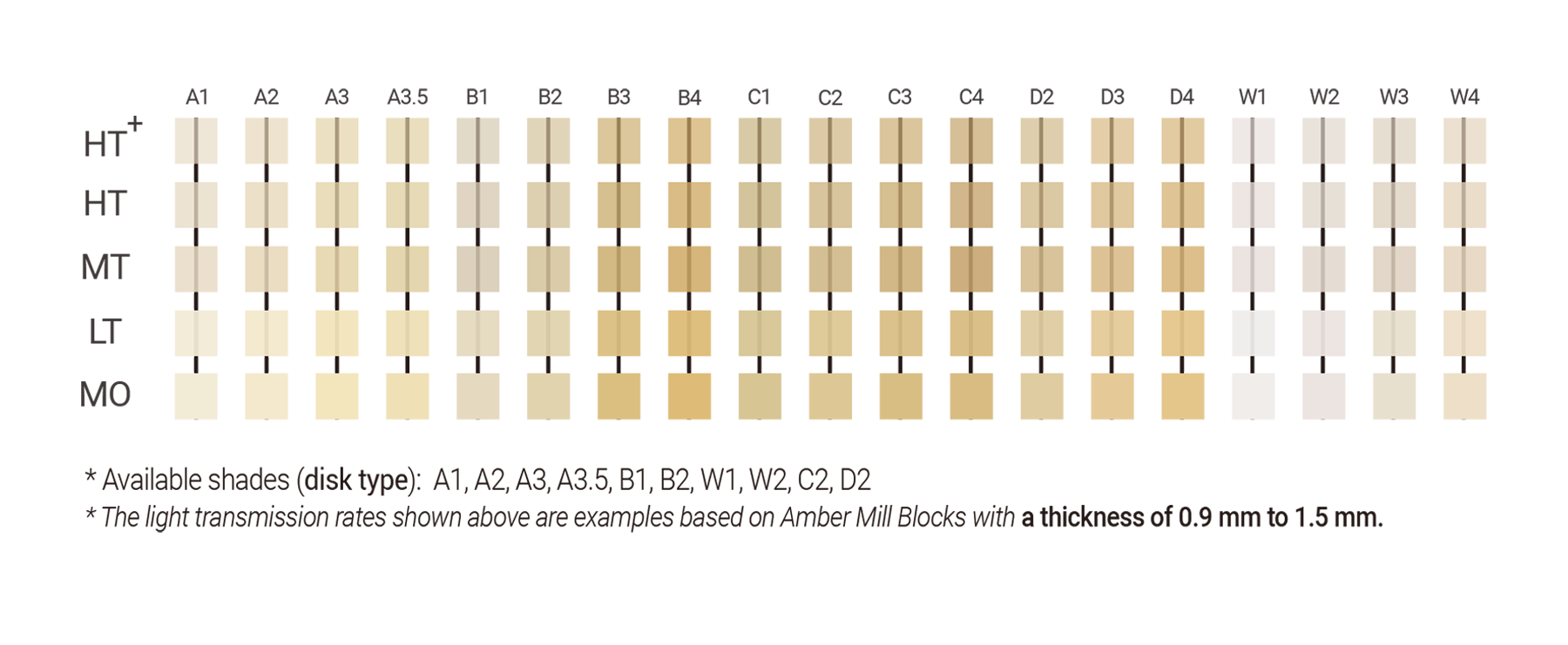
Available Shades
Available Shades
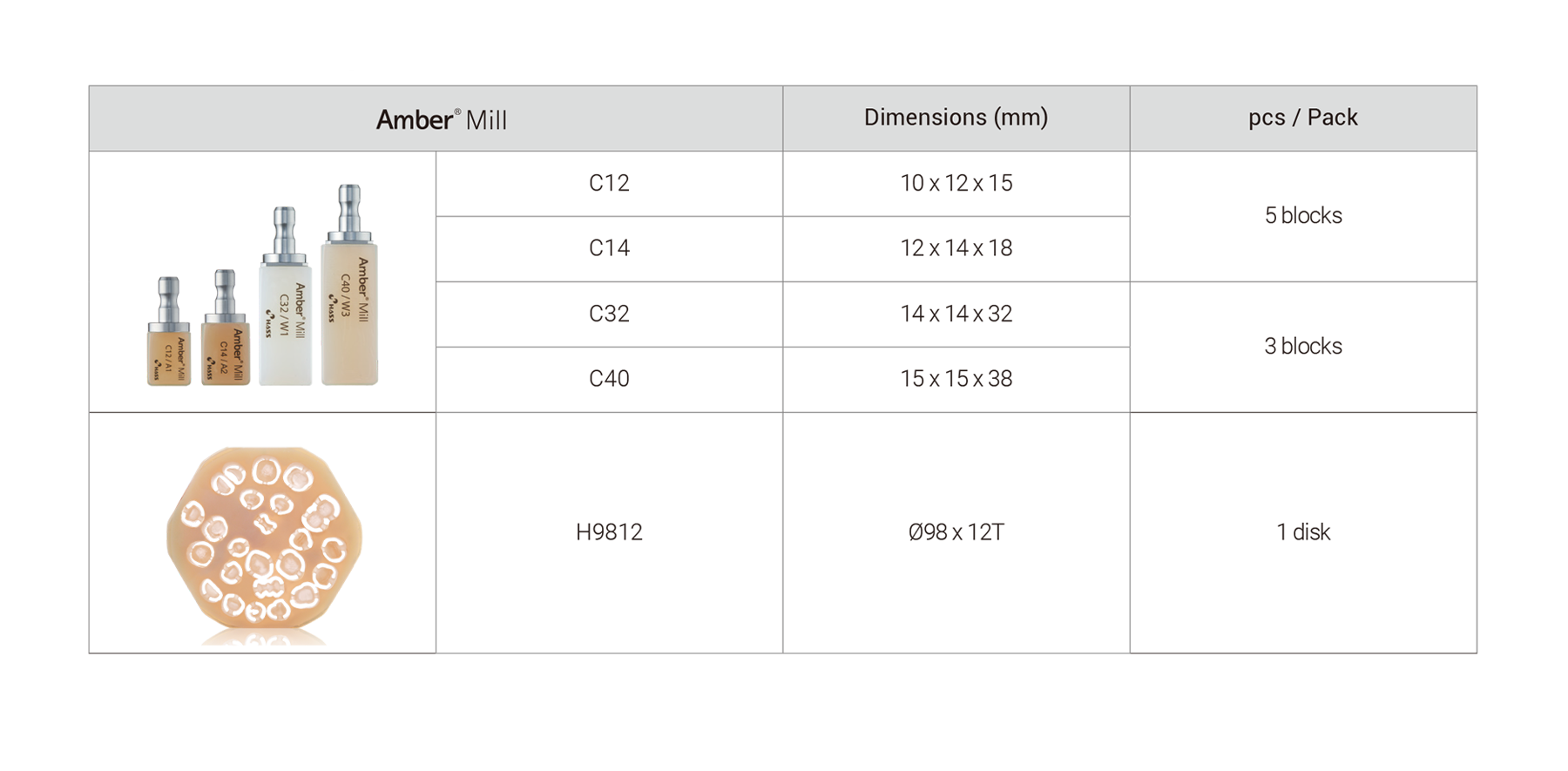
Product Line-up
Product Line-up
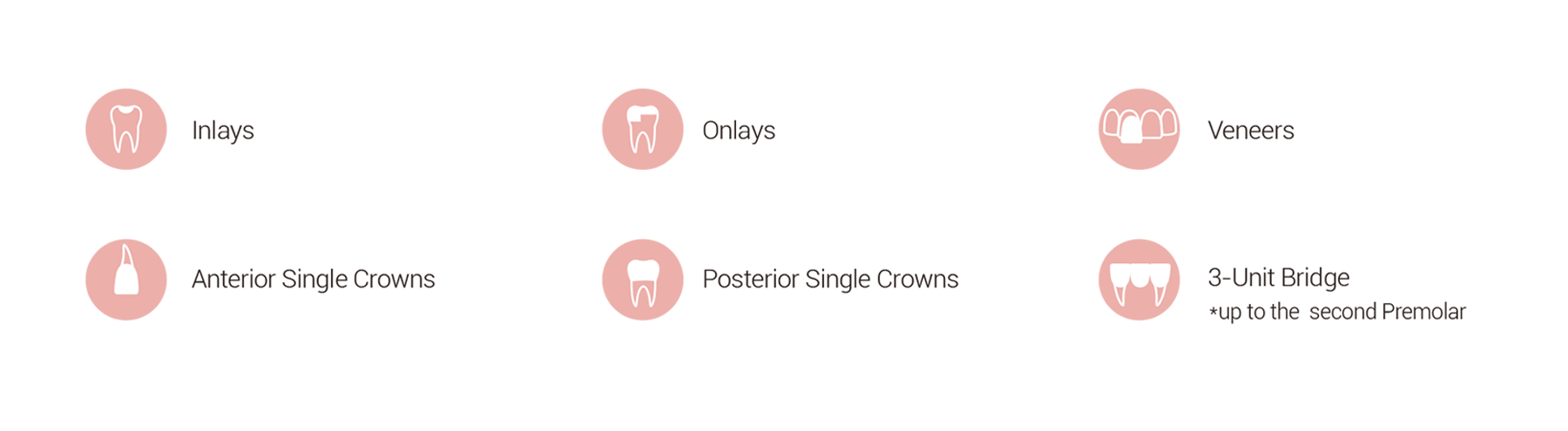
Indications
Indications
Contraindications
Contraindications